

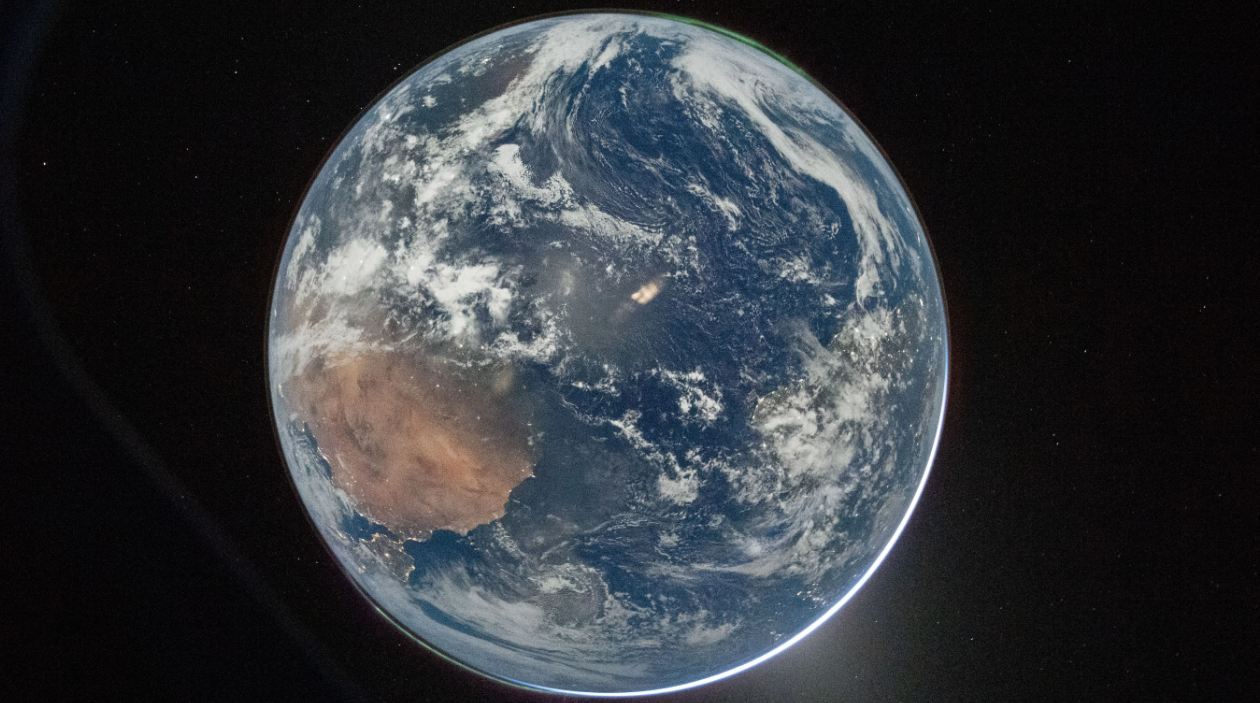
NASA’s Artemis II mission has already made history, but one newly released image of Earth has sparked a completely different kind of conversation online. After the space agency shared a fresh photo taken by the Artemis II crew from deep space, many people quickly noticed that our planet looked very different compared to the iconic 1972 “Blue Marble” image captured during the Apollo era.
The new photo, released on April 3, shows Earth glowing in a much softer and more muted way than many people expected. Some social media users said the planet looked “washed out,” while others wondered whether climate change, modern camera settings, or even image quality could explain the difference. The comparison instantly went viral because the 1972 image remains one of the most famous and recognizable photographs ever taken of Earth.
The Real Reason the Planet Looks Different
Despite the online theories, the explanation appears to be surprisingly simple: the new Artemis II image was taken under very different lighting conditions. According to the discussion highlighted in coverage of the photo, the side of Earth visible in the Artemis II image was largely in nighttime conditions, unlike the fully sunlit daytime appearance in the famous Apollo-era shot. That changes everything about how the planet looks. Instead of bright sunlight evenly illuminating the surface, the new image captures a darker side of Earth where city lights can be seen faintly glowing. At the same time, sunlight from the far side of the planet still lights up the atmosphere, creating a softer and more atmospheric visual effect. This is why the image looks dimmer, hazier, and less sharply contrasted than the older 1972 photo.
Camera Settings Played a Huge Role Too
Another major factor is modern camera sensitivity. A photographer mentioned in reporting on the image explained that the shot appears to have been taken using an extremely high ISO setting — reportedly around 51,200. In photography, ISO controls how sensitive the camera sensor is to light. The higher the ISO, the better a camera can capture darker scenes, but the image can also appear grainier, softer, or more “washed out” depending on the conditions. In this case, a very high ISO would allow the camera to reveal details on the night side of Earth that would otherwise be almost invisible. That includes city lights, atmospheric glow, and even subtle effects around the planet’s edge. Instead of being a flaw, the softer appearance may actually be a sign that the image is capturing something more complex than a straightforward daylight portrait of Earth.
Artemis II Is Using Far More Advanced Imaging Tech
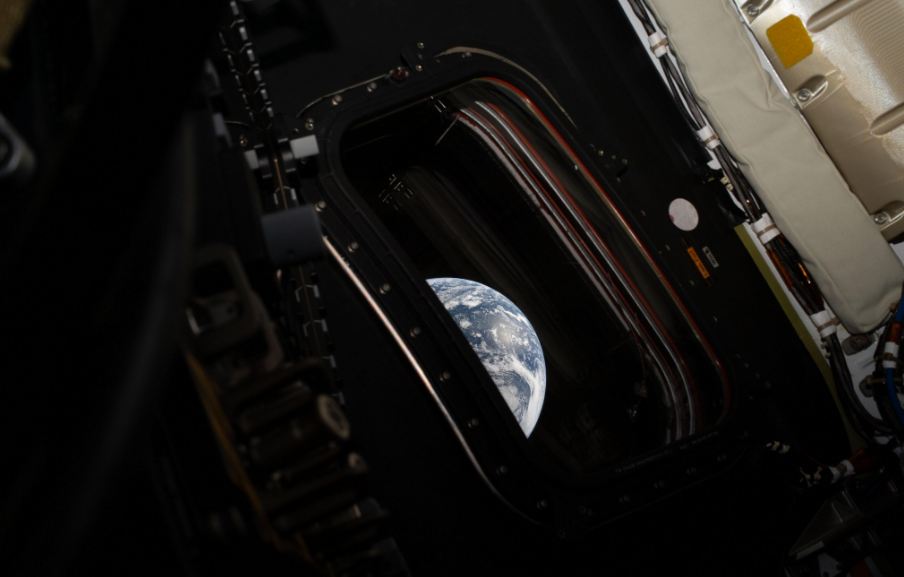
The Artemis II mission is also bringing much more advanced photography tools than people might expect. Reports note that the Orion spacecraft is equipped with 32 cameras and devices, including both mounted systems and handheld cameras used by the crew. Some of the most viral images from the mission were reportedly even captured using an iPhone 17 Pro Max, which has amazed people following the mission online. That means the images are not just simple recreations of older Apollo photos. They are being taken with a mix of modern digital technology, different exposure choices, and entirely different mission conditions. So while people naturally compare the new image to the legendary 1972 photograph, it is not an apples-to-apples comparison. The Artemis II photo is showing Earth in a more dramatic, low-light, almost cinematic way.
Why the Photo Still Matters
Even though the image looks different, many people believe that is exactly what makes it so special. Rather than replacing the old “Blue Marble,” the Artemis II photo offers a fresh perspective on the same planet. It reminds viewers that Earth can appear radically different depending on where you are, what time it is, and how the image is captured. NASA officials have also emphasized that these images matter because they show Earth without borders or divisions — just one shared home seen from far away. In that sense, the new Artemis II image may not look like the classic photo from 1972, but it still carries the same emotional power. And for many people, that may make it just as unforgettable.