
If you’ve ever noticed two small indentations just above the buttocks on the lower back, you’re not alone. These subtle marks are commonly known as Dimples of Venus, and they’ve fascinated people for centuries. Often associated with beauty and symmetry, these dimples are completely natural and rooted in human anatomy rather than mystery or myth.
The Anatomy Behind the Dimples
The dimples of Venus are located over the area where the pelvis connects to the spine, specifically near the posterior superior iliac spine. This is the point where short ligaments stretch between the skin and the underlying bone. In some people, this connection creates visible indentations on either side of the lower back.
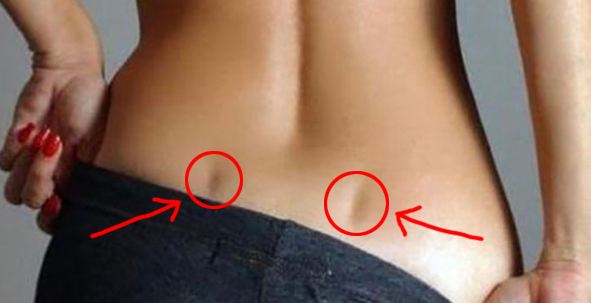
These dimples are not muscles, nor are they formed by exercise. They are simply the result of how your body is structured. You are born with the anatomical setup that determines whether these dimples will be visible. If the ligaments attach in a way that pulls the skin slightly inward, the dimples appear. They are more noticeable in individuals with lower body fat percentages, as there is less tissue covering the area. However, body composition alone does not create them — the bone and ligament structure must already be present.
Why Are They Called Dimples of Venus?
The name comes from Roman mythology. Venus was the Roman goddess of love and beauty, and the indentations were historically viewed as an attractive physical feature in women. In men, they are sometimes referred to as “Dimples of Apollo,” referencing the Greek god associated with youth and physical perfection. Despite their romantic name, these dimples have no special function. They are simply a variation in physical appearance, much like cheek dimples or a widow’s peak hairline.
Are They a Sign of Good Health?
One common myth is that these lower-back dimples indicate better circulation, fertility, or overall health. There is no scientific evidence to support these claims. While some fitness enthusiasts believe the dimples signal strong core muscles, this is not medically accurate. That said, the area where the dimples appear is close to the sacroiliac joints, which play an important role in supporting body weight and stabilizing movement. However, having or not having visible dimples does not determine how well these joints function. It’s important to distinguish these dimples from sacral dimples, which are located lower, near the crease of the buttocks. Sacral dimples in infants can sometimes require medical evaluation, but the dimples of Venus in adults are completely harmless.
Can You Get Them Through Exercise?
Another widespread misconception is that certain workouts can create these dimples. While strengthening your lower back and glute muscles may make existing dimples more visible by reducing surrounding fat, exercise cannot create them if your bone structure does not naturally allow for them. Similarly, gaining weight may make them less visible, but it won’t remove the underlying structure that forms them.
A Simple Genetic Trait
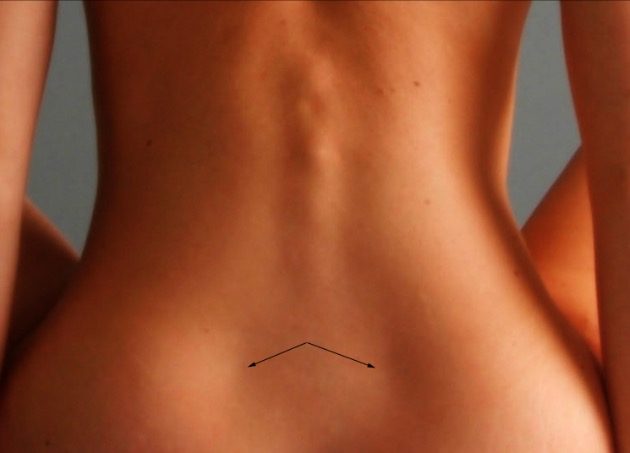
Ultimately, dimples of Venus are a genetic trait. Some people have them prominently, others faintly, and many not at all. They do not signal anything about personality, health, or physical ability. Like many physical features, they are simply part of the body’s natural diversity. While they may be admired for aesthetic reasons, medically they are neutral — neither beneficial nor harmful. So if you have those two small dimples on your lower back, there’s no hidden meaning behind them. They are simply a subtle reminder of how unique and varied human anatomy can be.