
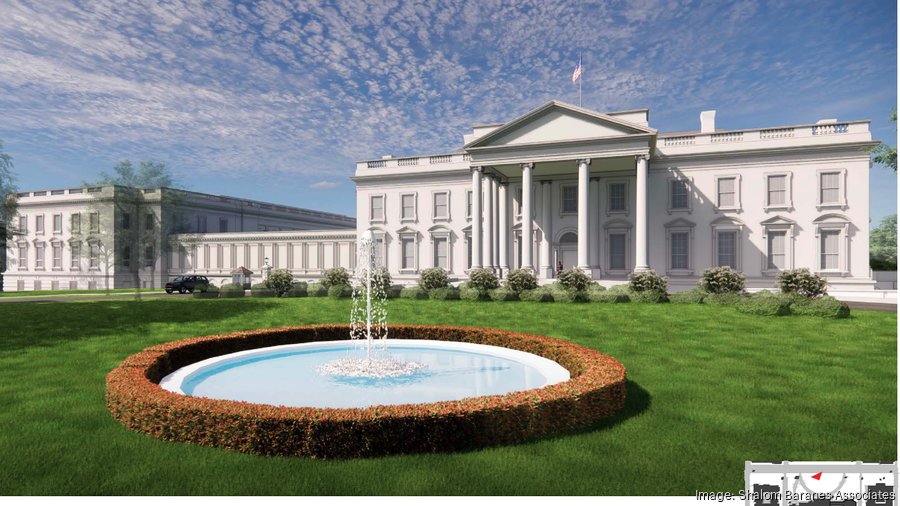
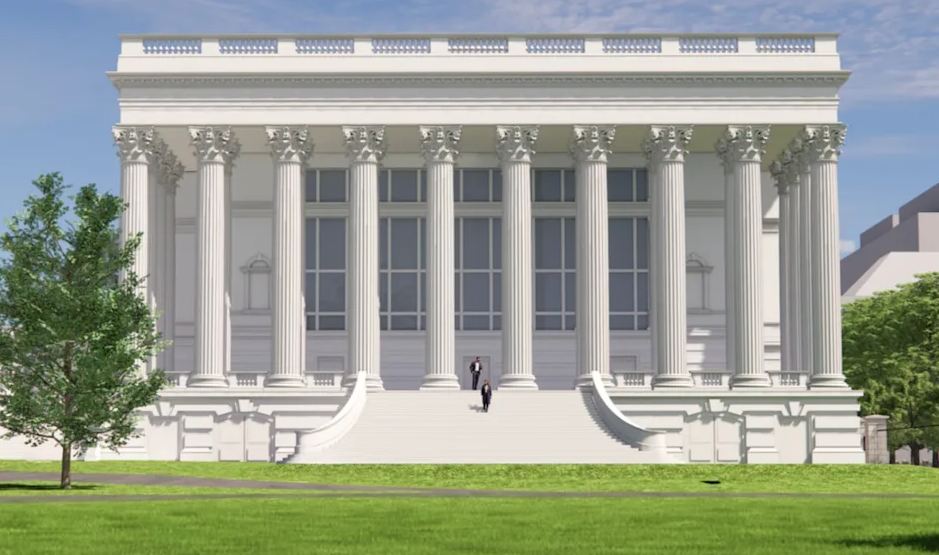
President Donald Trump and his administration have submitted the most detailed plans yet for a massive new $400 million ballroom addition to the White House. The proposal would create a roughly 90,000-square-foot structure adjacent to the mansion a size that critics say could overshadow the historic building itself. The design documents are being reviewed by the National Capital Planning Commission ahead of a key hearing scheduled for March 5, 2026.
The proposed facility, part of what the administration calls the “East Wing Modernization Project,” would accommodate large events that current White House spaces cannot easily host and is being pitched as a long-term asset for future presidential inaugurations and state functions.
Funding and Construction Status
Trump has repeatedly emphasized that private donors — not taxpayers — are financing the ballroom, with contributions reportedly coming from major corporations and wealthy individuals. Initial estimates put the price at about $200 million, but costs have risen significantly, with the current frequently cited figure at $400 million. Demolition of part of the historic East Wing already took place in late 2025 to make room for the build, drawing public attention and enthusiasm from supporters who see it as a needed expansion. However, critics and preservationists are alarmed by the pace and scale of the changes. A memo released by the White House asserts that historical elements were “excellently preserved” during demolition, and steps were taken to integrate salvaged materials into the new structure.
Legal and Preservation Battles
The ballroom project has sparked legal challenges and controversy. The National Trust for Historic Preservation filed a lawsuit arguing the construction lacks required congressional authorization, proper environmental reviews, and historic preservation procedures. Critics maintain that building such a major addition to a national landmark — the People’s House — demands transparency and fully mandated oversight.
A federal judge has so far allowed the project to proceed, indicating that construction work need not be halted immediately, although further legal rulings remain possible.
Supporters of the project argue that private funding absolves the need for congressional spending approval, while opponents counter that any structural change of this magnitude inherently requires public review and legislative oversight.
Architectural and Public Criticism
Architectural expert commenters and preservationists have voiced concern that the addition’s size, style, and height diverge sharply from the historic neoclassical look of the traditional White House — potentially dominating the iconic East Wing. Some argue the ballroom’s profile and scale could block traditional sightlines and significantly alter the visual character of the presidential residence. Opponents also maintain that the size of the structure, combined with interior functions like offices, suites, and event spaces, could fundamentally transform how the White House is used and perceived.
What Happens Next
Two federal planning bodies — the National Capital Planning Commission and the U.S. Commission of Fine Arts — are expected to issue their recommendations after the March 5 meeting, which will play a pivotal role in whether the ballroom project can move forward as designed. Meanwhile, legal proceedings and public debate are likely to continue, especially given the preservation arguments and ongoing concerns about oversight, transparency, and the long-term impact on one of America’s most symbolically significant buildings.