
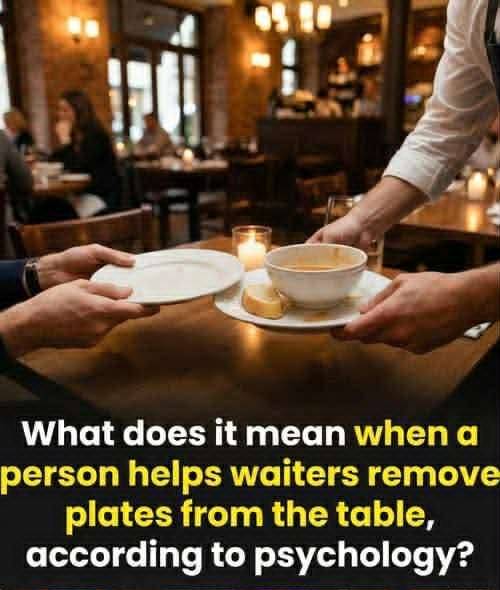
Have you ever noticed someone at your table quietly gathering plates and glasses before the server arrives? It might seem like a polite gesture or a habit learned from family upbringing, but psychologists say there’s more going on beneath the surface. These small acts of help reveal subtle insights into human behaviour, empathy, and social awareness even in moments we barely notice.
Such behaviour isn’t about impressing others or showing off good manners. Instead, it connects to deeper psychological patterns that shape how we interact in shared spaces like restaurants.
More Than Just Politeness
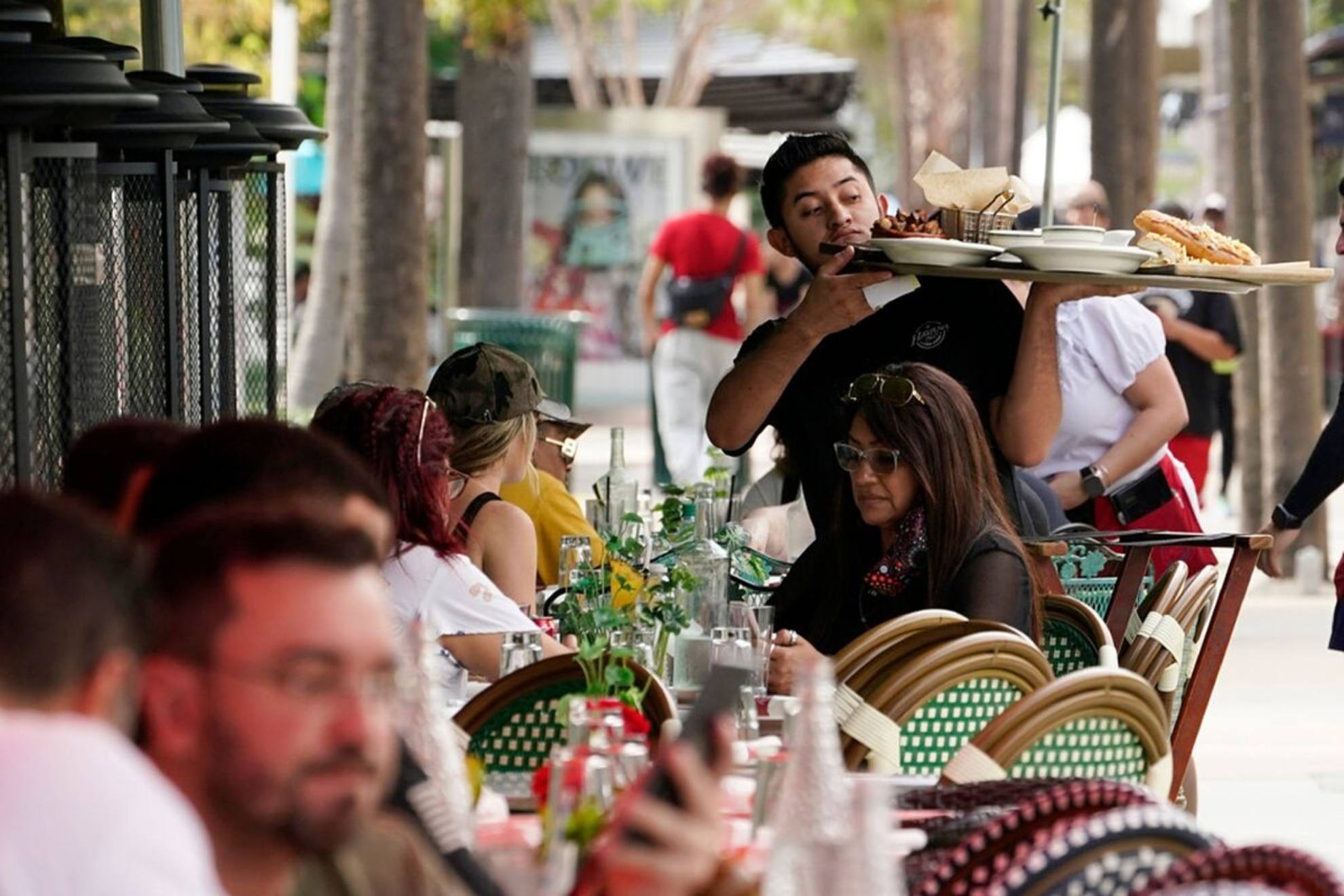
At its simplest level, picking up empty dishes or lining up cutlery seems polite — something well-mannered people do. But when social scientists look closer, they see what is called prosocial behaviour: voluntary actions meant to benefit someone else without expecting anything in return. Prosocial actions can range from holding a door open to helping someone carry groceries — and even small restaurant gestures fall into this category. These acts often happen without planning or thought. A diner glances up, sees the waiter balancing heavy trays, and instinctively moves a plate out of the way. That split-second decision reflects more than etiquette; it shows awareness of another person’s workload and the desire to make their job just a bit easier.
Empathy and Awareness at Play
One key factor behind helping behaviour is empathy — the ability to sense what another person is feeling and respond appropriately. People who easily notice when a server is struggling, tired, or overloaded tend to act without hesitation. They pick up plates or step in because they recognise stress and want to ease it, not because they expect praise or reward.
This kind of sensitivity to others’ states connects to emotional intelligence: the capacity to pick up on nonverbal cues like body language and tone, and adjust one’s own behaviour accordingly. Someone with high emotional intelligence might notice a slight hesitation in the waiter’s step and reflexively make room or lift a glass to help. Interestingly, many people who display these behaviours have personal experience with service roles themselves, such as working in hospitality or retail. That lived experience can make them more attuned to the physical effort and emotional labour service staff invest every day.
A Softening of Social Boundaries
Restaurants naturally create a subtle hierarchy: the diners sit, the staff stands; one group is served, the other serves. Helping a waiter, even in a small way, blurs that line. It sends an unspoken message that we recognise the shared humanity behind every role. These micro-gestures communicate respect for the work being done. They show that the diner sees the waiter as more than part of the background service machinery — as a person whose effort matters. That matters in social psychology because it reinforces values like respect and mutual consideration, rather than strict customer-server separation.
When Helping Comes From Other Motives
It’s worth noting that not all acts of assistance are rooted purely in selfless concern. Sometimes people help because of social pressure, nervousness, or the desire to appear well-mannered. In social contexts, individuals can be motivated by reciprocity — the learned expectation that positive actions will lead to positive responses in return. In other cases, helping behaviours might reduce a person’s own discomfort or negative feelings. Psychological models suggest that people sometimes assist others to ease their own emotional state, a concept known as the negative-state relief model. So while many people help out of genuine kindness, others may be driven by habits, cultural norms, or personal comfort levels.

A Small Gesture With Big Meaning
Regardless of motive, these tiny interactions shape the social rhythm of everyday life. A simple act of clearing plates can brighten a server’s shift, create a more relaxed atmosphere at the table, and remind everyone present that small acts of care still matter in a busy world. These behaviours reflect how we relate to others — whether through empathy, respect, or shared social values — and highlight the powerful psychology behind even the most ordinary moments.