
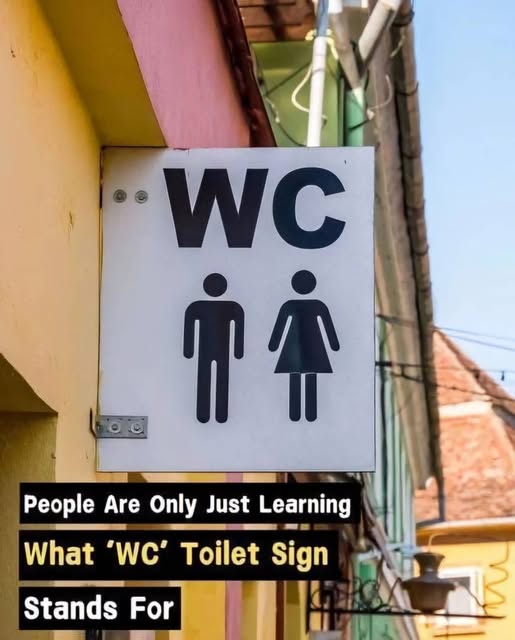
If you’ve ever traveled or visited public places, you’ve likely seen the letters “WC” on signs indicating the bathroom or toilet. But what exactly does WC stand for? The abbreviation WC means “Water Closet.” This term originated in the 19th century and was used to describe a room with a flushing toilet connected to a water supply essentially, a closet with running water for sanitation purposes.
Origins of the Water Closet
The phrase water closet came about during the Victorian era, when indoor plumbing was becoming more common but still a novelty in many places. Early toilets were often just simple pits or chamber pots, so a “water closet” was a revolutionary concept: a small room housing a flushing toilet with water for cleaning and waste removal. Inventors like Thomas Crapper (though often mistakenly credited with inventing the flush toilet) helped popularize these devices in the late 1800s, and the term “water closet” became common in Britain and other parts of Europe.

Why the Full Term Fell Out of Use
Despite its utility, the phrase “water closet” gradually faded from everyday language for a few reasons:
- Euphemism and Sensitivity: Talking about bodily functions became increasingly private and sometimes taboo. The word “closet,” combined with “water,” sounded overly technical or clinical, so people preferred gentler terms.
- Rise of New Terms: Words like “toilet,” “bathroom,” “restroom,” or “lavatory” became more popular, especially in America, because they sounded less formal or were easier to say.
- Changing Architecture: Bathrooms became more than just a room with a toilet; they included sinks, showers, and bathtubs. So the term “water closet” felt too narrow or outdated.
The Legacy of WC in Signs and International Use
Even though the full term disappeared from conversation, the abbreviation WC stuck around, especially on signage. This is because:
- Universality: In many countries, especially in Europe and parts of Asia, WC is widely recognized and understood by travelers, regardless of language.
- Space Saving: Signs need to be concise and clear, so the two-letter abbreviation is practical.
- Tradition: The term has historical roots and continues to appear on maps, train stations, airports, and public buildings.
Modern Alternatives and Cultural Differences
Different countries use various terms and signs for toilets:
- In the United States, “restroom” or “bathroom” is common.
- In the UK, “toilet” or “loo” is often used.
- In France, you might see “WC” or “toilettes.”
- In Japan, symbols or pictograms are common, sometimes supplemented by English terms.
- These variations highlight how language evolves culturally while some abbreviations like WC remain useful in international contexts. While some abbreviations like WC remain useful in international contexts.
Conclusion
The humble WC sign carries a surprising history tied to the evolution of indoor plumbing and social attitudes about privacy and cleanliness. While we no longer say “water closet” aloud in everyday speech, the abbreviation remains a universal symbol guiding millions to essential facilities worldwide. So next time you spot a WC sign, you’ll know it’s a nod to a Victorian-era innovation that transformed how we think about hygiene and sanitation.