
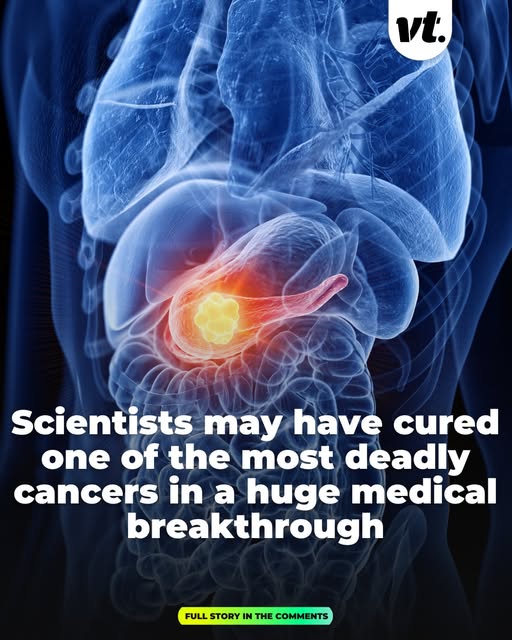
Scientists around the world continually seek more effective ways to treat cancer, a group of diseases that remains one of the leading causes of death globally. Recently, a research team in Spain announced results that have sparked new hope: for the first time in laboratory experiments, they successfully eliminated pancreatic cancer one of the deadliest forms of the disease in animal models. While this advance is not yet a proven cure for humans, it represents a significant step forward in cancer research and has drawn attention from physicians, researchers, and patients alike.
Pancreatic Cancer: A Formidable Challenge
Pancreatic cancer, especially the type called pancreatic ductal adenocarcinoma, has long been known for its poor prognosis. It is often diagnosed at a late stage, spreads rapidly, and is resistant to many standard treatments. Historically, the five-year survival rates for people diagnosed with this cancer have been extremely low — in many cases under 10 percent — making it one of the most lethal cancers worldwide. For decades, researchers have looked for ways to target the underlying biological mechanisms that allow pancreatic tumors to grow and resist treatment. Conventional therapies like surgery, chemotherapy and radiation can help some patients, but they often fail to eradicate the disease entirely. Because pancreatic tumors can be so aggressive and hard to treat, breakthroughs in this field are particularly noteworthy.
The Breakthrough in the Laboratory
In the recent research led by a team at the Spanish National Cancer Research Centre (CNIO) in Madrid, scientists developed a triple-drug combination that was administered to mice bearing pancreatic tumors. According to the team, this combination therapy completely eliminated the tumors in the animal models with no tumor regrowth observed over time and with minimal side effects on the animals. These results are promising because they suggest that the treatment can both eliminate the cancer and sustain that response without immediate relapse. The therapy works by targeting multiple aspects of tumor biology simultaneously, suppressing the ability of cancer cells to resist treatment while enhancing the body’s capacity to respond to the therapy. While the exact mechanisms are still being studied, the results indicate a powerful synergistic effect that may overcome the stubborn resistance typically seen in pancreatic cancer cells.
What This Means for Human Treatment
It’s important to understand that success in animal models does not guarantee a cure in humans. Many treatments that eliminate tumors in mice fail to produce the same effects in people due to differences in biology, immune response and the complexity of human tumors. Only a small percentage of experimental therapies make it through the full series of clinical trials needed for approval in human medicine. Nevertheless, the Spanish team’s results have encouraged researchers and clinicians because they show that pancreatic tumors — which are notoriously hard to treat — can be completely eliminated in controlled conditions. Plans are already underway to move toward clinical evaluations in humans, beginning with safety tests and early-phase trials to assess whether similar responses can be achieved in patients.
A Broader Context of Cancer Research Progress
While this development has captured headlines, it fits into a larger pattern of incremental progress in cancer research. Scientists are advancing new cell-based therapies, gene editing techniques, precision oncology, and immune system harnessing strategies that have shown real promise in treating cancers previously thought intractable. For example, cutting-edge approaches such as engineered immune cells (CAR-T therapies), nanotechnology-based drug delivery systems, and combinations of immunotherapy and targeted drugs have led to remarkable results in other cancer types. These efforts collectively suggest that the era of truly effective, personalized cancer treatments may be approaching, even if a universal cure remains elusive.

Hope and Caution
The Spanish research on pancreatic cancer represents a major milestone in the long journey toward better cancer therapies. It offers hope to patients and families affected by a disease that has resisted many previous advances. However, medical experts emphasize caution: further research and rigorous human clinical trials are necessary before this approach can be considered a reliable treatment for people. As research continues, the broader medical community will watch closely to see whether these early laboratory results can translate into safe and effective cancer treatments for patients — potentially rewriting the future of pancreatic cancer care and offering new optimism to millions around the world.