
What initially began as a routine renovation project in the back garden of natural historian Sir David Attenborough’s home turned into a remarkable historical and forensic breakthrough. In October 2010, workers digging at the rear of Attenborough’s property in Richmond, southwest London uncovered a buried human skull beneath what had been the site of the old Hole in the Wall pub. The unexpected find would eventually close a mystery that had remained unsolved since the late 19th century.
Attenborough, widely known for his decades-long career as a broadcaster and environmental advocate, had purchased the house in 2009. At the time of the discovery, he had begun extending and refurbishing the property. The skull was found amid old foundations and Victorian-era tiles, immediately catching police attention because it appeared to date back well over a century.
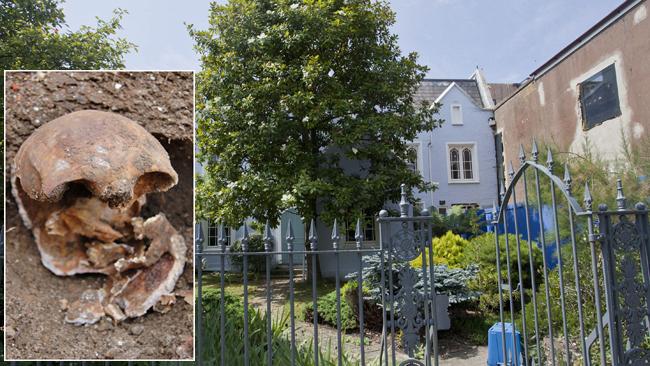
From Garden Find to Historical Puzzle
Police took the skull for analysis and investigation. Forensic experts determined that it belonged to a white female of mature age, and radiocarbon dating placed it sometime between the mid-17th century and the late 19th century. With the location of the find and the dating results, detectives began to connect dots that had eluded investigators for more than 130 years. A breakthrough came when historians and police revisited the infamous “Barnes Mystery,” a murder case that shocked Victorian London in 1879. A wealthy widow, Julia Martha Thomas, had been brutally murdered by her Irish housemaid, Kate Webster. The murder caused widespread public fascination and sensational newspaper coverage at the time, but crucially, the victim’s head was never recovered.
The 1879 Murder of Julia Martha Thomas
Julia Martha Thomas, then 55 years old, lived alone in Richmond after the death of her husband. She hired Kate Webster as a servant, unaware of her troubled background that included petty theft. Their relationship quickly soured, and after a series of disputes, Thomas dismissed Webster on 28 February 1879. Webster convinced Thomas to let her stay a few extra days and the following week killed her. Webster later confessed that the assault began after an argument, during which she pushed Thomas down the stairs and strangled her. In a gruesome attempt to conceal the crime, Webster dismembered the body, using tools to cut it into pieces and boiling the parts. Some bones and body parts were thrown into the River Thames, where portions were later discovered, but the head was never found. After the killing, Webster even impersonated her victim, wearing Thomas’s clothes and handling her business affairs. Eventually, suspicious neighbours alerted authorities, and Webster fled to Ireland but was swiftly captured and brought back to London. She was tried, convicted of murder in July 1879 at the Old Bailey, and sentenced to death. Her conviction was a high-profile event, widely reported across Britain and Ireland.
How the Garden Skull Closed the Case
For decades after the murder, the absence of Thomas’s head left a key piece of forensic evidence missing, and the case’s official record lacked a definitive account of her final moments. The skull found in Attenborough’s garden provided that missing link. Radiocarbon dating, the location of the burial, and historical records allowed investigators to confidently identify the remains as belonging to Julia Martha Thomas. In July 2011, a West London coroner formally recorded a verdict of unlawful killing and concluded that Thomas had died from asphyxiation and a head injury, based on the position and condition of the skull and historical documentation. This brought closure to a murder mystery that had spanned nearly a century and a half.

A Legacy of Crime and History
Although the discovery happened many years ago, the story continues to fascinate because of the extraordinary way it bridges Victorian history and modern forensic investigation. The case highlights how archaeology, historical research, and scientific techniques can come together to solve questions once thought permanently lost to time. For Sir David Attenborough, it remains an unusual chapter in the life of one of Britain’s most beloved broadcasters — a reminder that even a peaceful garden can hold echoes of a dark past.