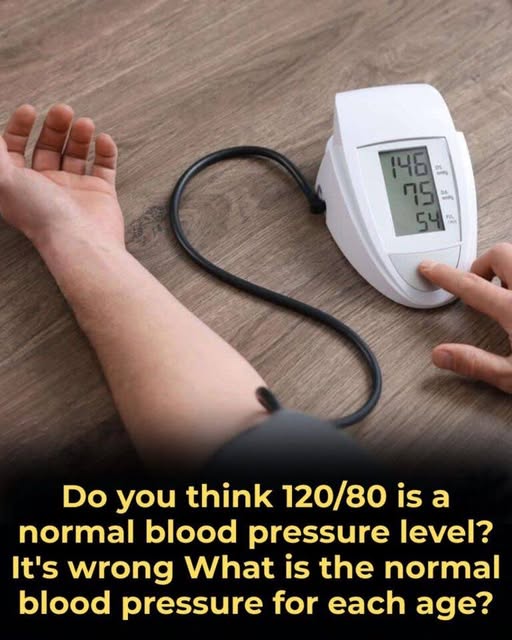
Blood pressure measures the force of your blood pushing against the walls of your arteries as your heart pumps. It’s recorded as two numbers:
- Systolic pressure (the top number) — the force when your heart contracts
- Diastolic pressure (the bottom number) — the force when your heart relaxes between beats
For example, a reading of 120/80 mmHg is spoken as “120 over 80.”
General “Normal” Range for Adults
Medical experts now generally agree that a normal blood pressure for adults of any age is below 120/80 mmHg. This means your systolic (top number) is under 120, and your diastolic (bottom number) is under 80. If your readings are consistently above this — especially 130/80 or higher — medical guidelines consider this elevated or high blood pressure and may recommend lifestyle changes or treatment. Even though blood pressure tends to rise gradually with age due to changes in blood vessels, the ideal “normal” target stays the same for adults. Older adults may naturally have slightly higher pressures, but lower numbers are still better for long-term heart health.

Typical Blood Pressure by Age Group
Children and Teenagers (0–18 years)
Young people normally have much lower blood pressure than adults, and what’s “normal” depends on age and development:
- Newborn–1 month: ~60–90 / 20–60
- Infant: ~87–105 / 53–66
- Toddler: ~95–105 / 53–66
- School-aged child: ~97–112 / 57–71
- Adolescents: ~112–128 / 66–80
- This means readings like 110/70 are expected in school-age children, while teens often hover around 112–128 mmHg systolic.
Adults (18+ years)
Normal ranges for adults tend to cluster around healthy averages depending on age and sex, even though the ideal remains <120/80 mmHg:
Age Group Average Normal BP (Women) Average Normal BP (Men)
18–39 ~110/68 mmHg ~119/70 mmHg
40–59 ~122/74 mmHg ~124/77 mmHg
60+ ~139/68 mmHg ~133/69 mmHg
These numbers reflect typical averages, not strict cutoffs — some people naturally fall a little above or below these ranges and can still be healthy.
Why Age Matters, But Target Doesn’t Change
As you get older, the systolic number (top number) often creeps up due to changes in arteries and lifestyle. However, health organizations still recommend keeping it as close as possible to 120/80 mmHg because higher pressures over time are linked with greater risk of heart disease, stroke, and other conditions. This approach is now preferred over old ideas that allowable blood pressure changes dramatically with age — instead, doctors encourage managing blood pressure proactively at every stage of life.
Categories of Blood Pressure for Adults
Understanding where your numbers fall helps you know what might require action:
- Normal: <120 / <80 mmHg
- Elevated: 120–129 / <80 mmHg
- High BP Stage 1: 130–139 / 80–89 mmHg
- High BP Stage 2: ≥140 / ≥90 mmHg
If your blood pressure consistently falls into the high categories, your doctor may recommend lifestyle changes or medication.

When to See a Doctor
Even if your numbers are slightly above normal just once, it doesn’t automatically mean a problem. Blood pressure fluctuates with stress, activity, and time of day. However, consistently elevated readings warrant medical advice. Home monitoring and regular check-ups help paint a clearer picture of your heart health.
Conclusion: Focus on Your Numbers
Normal blood pressure for adults is generally considered below 120/80 mmHg, while children and teens have age-specific ranges that are naturally lower. Age doesn’t change the healthy target — it just highlights why monitoring over time is important. Knowing your numbers and tracking changes can help prevent serious health issues and keep your heart strong as you age.