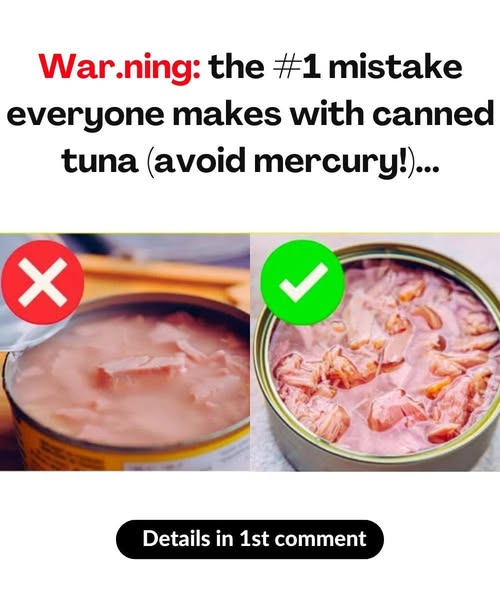
Tuna especially canned tuna is a popular, nutritious food rich in protein, omega-3 fats, and important vitamins. But like many predatory fish, it accumulates mercury in its tissues as it eats smaller fish over time. Mercury, particularly in the form called methylmercury, is a neurotoxin that can harm the nervous system and at high levels affect brain and motor function.
This is not unique to tuna — mercury occurs in most seafood — but tuna’s size and position in the food chain mean it generally has higher mercury levels than milder fish like salmon or cod.
The “Mistake” People Often Make
The most common misconception online — including on clickbait health sites — is that any amount of canned tuna is inherently risky or that there’s one simple trick to avoid mercury entirely. That’s not accurate.

Here’s the reality:
🐟 Not all tuna is the same
There are different kinds of tuna:
- Canned light tuna (often skipjack): lowest mercury levels among tuna types and the best choice for frequent consumption.
- Canned albacore (white tuna): higher mercury — often about three times more than light tuna.
- Yellowfin and bigeye tuna: usually even higher mercury, common in fresh or “gourmet” products rather than regular canned tuna.
So the first mistake is treating all tuna as if it has the same mercury content.
Safe Consumption Guidelines
Health authorities around the world provide general recommendations to help you enjoy tuna while reducing mercury exposure:
Tips for healthier tuna habits
Special considerations
Certain groups are more vulnerable and need to be particularly cautious:
- Pregnant people and those planning pregnancy
- Breastfeeding mothers
- Young children
For these groups, authorities often recommend stricter limits on tuna and other mercury-containing fish or suggest choosing other low-mercury seafood options instead.
What Happens If You Eat Too Much Mercury?
Mercury doesn’t break down in the body easily — it can accumulate over time. High exposure, especially in sensitive groups, may affect:
- Brain development in infants and children
- Cognitive and motor function
- Nervous system health
- This is why guidelines exist: to balance the nutritional benefit of tuna with the potential risks of mercury.
Smart Ways to Include Tuna in Your Diet
Here are practical, science-based tips:
✔ Vary your fish choices — mix tuna with salmon, sardines, shrimp, or cod to keep mercury exposure lower overall.
✔ Read labels — “light” tuna is generally the safer choice for regular meals.
✔ Don’t over-rely on tuna every day — even if safe for most adults, eating it every single day isn’t necessary for a healthy diet.
✔ Consult health guidance if you’re in a sensitive group (pregnancy, early childhood, etc.).
Bottom Line
Canned tuna is nutritious and safe for most people when eaten in moderation and with attention to mercury content. Choosing lower-mercury tuna types, balancing with other seafood, and following recommended serving limits helps you enjoy tuna’s benefits without undue risk.

Conclusion
Canned tuna may seem like a quick, healthy protein choice, but how you choose and eat it makes a big difference. While tuna contains valuable nutrients like omega-3 fatty acids, vitamin D, and lean protein, it also carries a risk when consumed in the wrong way or too often. Mercury builds up in certain types of tuna, especially larger species, and over time it can quietly damage the brain, nervous system, and kidneys. The good news is that you don’t need to give up tuna completely to stay safe. By choosing lower-mercury options, limiting how often you eat it, and rotating it with other healthy proteins like salmon, sardines, beans, eggs, or chicken, you can enjoy the benefits without putting your health at risk. Paying attention to portion size and reading labels carefully are small habits that can make a big difference. Being informed is the best protection. When you understand where mercury comes from and how it affects the body, you are better equipped to make smarter choices for yourself and your family. Tuna can still be part of a balanced diet—but only when it’s eaten in moderation and with awareness. Your long-term health depends not just on what you eat, but on how wisely you choose it.