
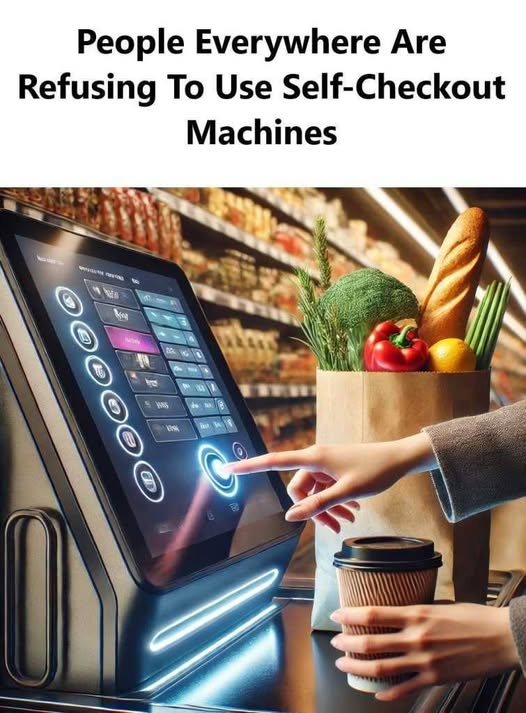
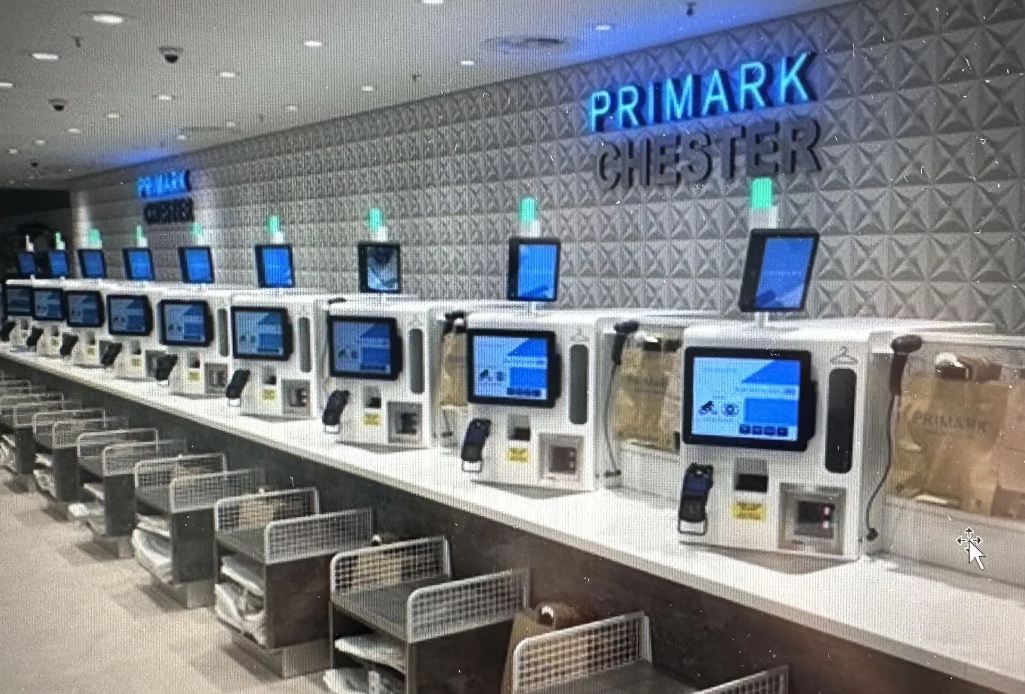
Self‑checkout machines those kiosks where customers scan and pay for their own items without a cashier have become increasingly common in supermarkets, drugstores, and other retail outlets. For many, they represent convenience and speed. But a growing number of people are refusing to use them, and one of the most talked‑about reasons is a belief that these machines are destroying jobs not just replacing one cashier with another, but fundamentally reducing employment opportunities in retail.
This reaction isn’t just about personal preference; it reflects broader concerns about how automation and technology are reshaping the workforce and the nature of work itself.
The Job‑Loss Concern
A central argument among critics is simple: self‑checkout eliminates the need for human cashiers, meaning fewer jobs overall. People who oppose the machines say that choosing to use them contributes to that trend by encouraging retailers to invest in machines instead of staff. This worry resonates especially with older shoppers and those in communities that have seen job losses in retail over the past decade. Many feel a sense of social responsibility — that using a self‑checkout machine is equivalent to “taking a job away” from someone who needs employment. Some organized groups and local politicians have even called for limits on self‑checkout installation, arguing that these technologies contribute to understaffed stores and unsafe conditions — complaints often framed around protecting jobs and worker rights.

Technology vs. Human Work
The debate over self‑checkout taps into a much larger issue: how automation affects employment. While nowhere near as advanced as AI replacing office jobs or industrial robots transforming factories, self‑checkout machines are part of the same trend of technology shifting roles in the workplace. Retail automation isn’t new. Technology has been gradually introduced to reduce repetitive tasks — from barcode scanners to inventory software — and self‑checkout is just the latest form of labor‑offsetting technology. Studies show these systems increase the role of employees who must monitor machines and resolve errors, rather than simply replacing them outright — but the perception of job loss remains a powerful driver of pushback.
Frustrations Beyond Jobs
It’s not only employment fears that fuel resistance. Many customers report frustration and negative experiences with the machines themselves. Common complaints include:
- Machines failing to recognise items or requiring frequent staff intervention.
- Longer checkout times when errors occur.
- Feeling like they are doing the store’s work for free.
- Less personal interaction and poorer customer service experience.
- In fact, some research suggests that traditional staffed checkout lines can create higher customer loyalty because customers feel more valued and less burdened by scanning and bagging their own purchases.
Retailers Respond — Some Are Backtracking
Despite the widespread adoption of self‑checkout by major chains, there are signs that not all retailers are convinced this is the best path forward. Some supermarket chains have reduced the number of self‑checkout machines or even removed them, citing technical problems, elevated theft and shrinkage, and customer dissatisfaction as reasons to bring back more staffed lanes. Other retailers, like Trader Joe’s, have publicly stated that they don’t plan to introduce self‑checkout at all, choosing instead to prioritise human cashiers because they see them as part of the customer experience and employment value.
What the Data Actually Says
While many shoppers think self‑checkout leads to massive job losses, the reality is more complicated. In many cases, the introduction of self‑checkout has:
- shifted labor roles rather than eliminated them outright, with employees taking on monitoring or customer assistance duties, and
- not drastically reduced overall staffing in some stores when demand and operating patterns change.
Nevertheless, the perception of job killing remains strong enough that some customers actively avoid the technology for ethical or social reasons — a trend that could influence how retailers decide to balance self‑service with human‑staffed options moving forward.