Blending families can be one of life’s most rewarding but delicate emotional journeys. When new marriages unite children from previous relationships, creating harmony often takes patience, empathy, and respect for each person’s history. But what happens when a deeply meaningful family tradition collides with a new spouse’s demands?
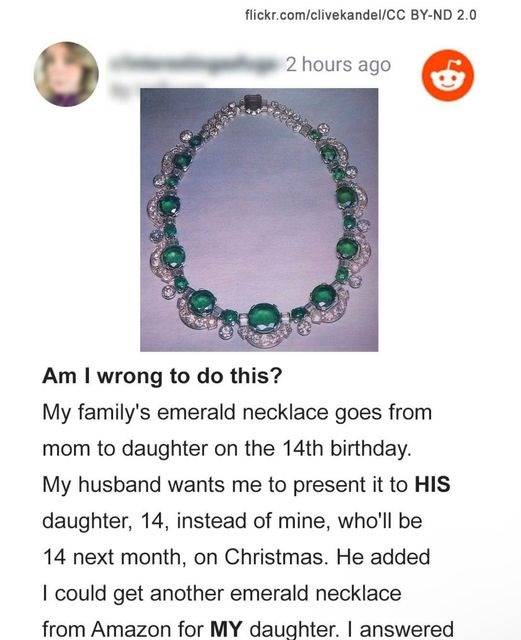
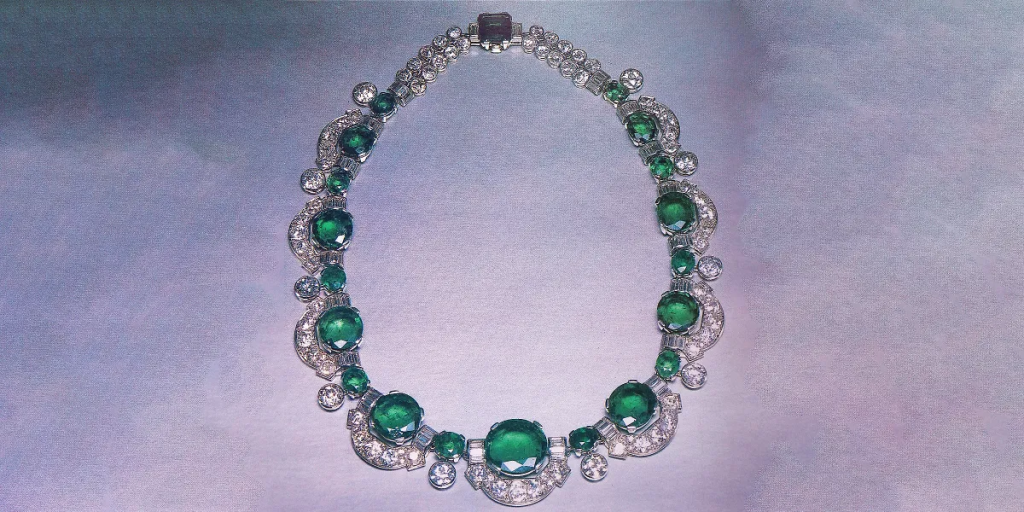
This conflict became painfully real for one mother, who found herself at the center of a fierce disagreement over a priceless family heirloom — an emerald necklace with deep matrilineal significance.
The Heritage Necklace
The heirloom in question was not just a valuable piece of jewelry, but a symbol of generations — passed from mother to eldest daughter. It wasn’t a simple gift but a tradition that carried emotional and historical weight within the woman’s family. According to the tradition, the necklace was destined to go to her biological daughter on her 14th birthday. This tradition was longstanding and well understood by the entire family, including the husband. However, when the time came to honor this tradition, tensions erupted.
A Husband’s Controversial Suggestion
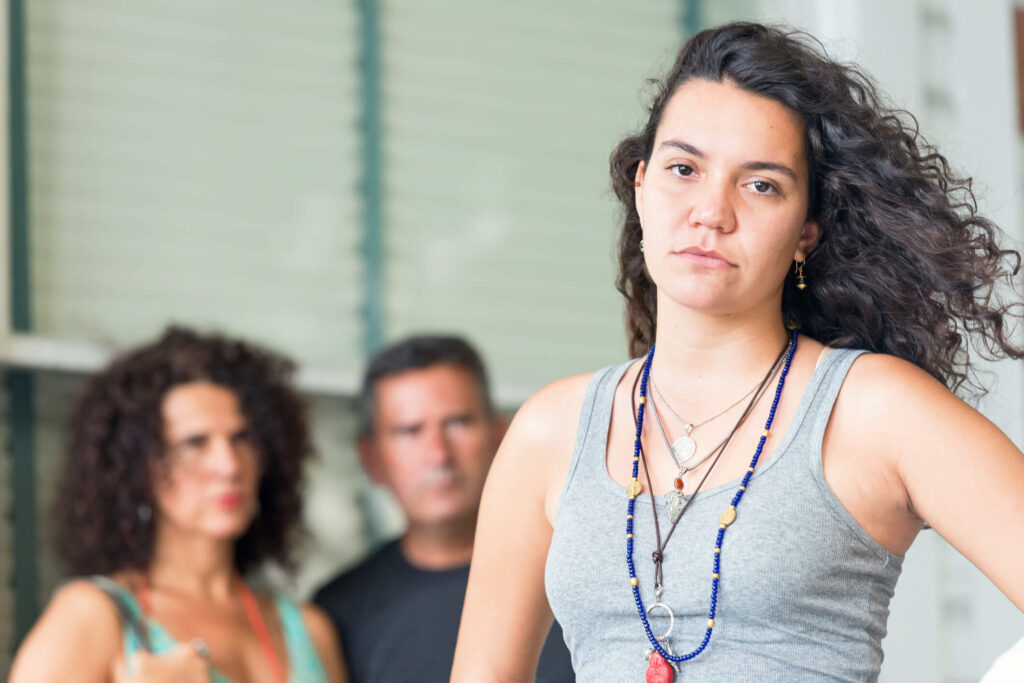
Rather than support his wife’s plan to follow her family’s tradition, her husband proposed something quite different. He suggested that the heirloom be given to his own daughter from a previous marriage instead. His reasoning was framed as an attempt at inclusion — suggesting that giving the necklace to his daughter would help her feel accepted and loved in the newly blended family.
But there was a deeper issue beneath the surface.
What appeared to be a gesture of unity was, in reality, a demand that ignored the personal and cultural significance of the necklace. It would require the wife to give up something sacred to her and her daughter, not simply a piece of jewelry but a tangible connection to heritage and identity.
The Daughter’s Perspective
The rightful heir, the wife’s daughter, voiced her objections immediately. For her, the necklace represented more than tradition — it was a reflection of her place in her maternal lineage. Allowing it to go to someone else, especially for the sake of “inclusion,” felt like an erasure of her familial identity. This perspective revealed a critical mistake in the husband’s argument: meaning cannot be replaced simply by gifting something valuable. True inclusion isn’t earned through transferring another’s legacy.
Escalation and Emotional Manipulation
When the wife declined her husband’s request, he didn’t accept the decision. Instead, he accused her of favoritism and brought his own family into the dispute to justify his position. This move escalated what should have been a private disagreement into a broader family conflict. It revealed the true nature of the husband’s insistence — it was less about unity and more about control. Rather than respecting tradition, he attempted to rewrite it to suit his own preferences, disregarding the emotional impact on his wife and stepdaughter.
Public Reaction and Moral Clarity
When the wife shared her story with a larger online community for support, the response was overwhelmingly in favor of honoring the original tradition. Commenters emphasized that an heirloom is not just about monetary value — it holds personal history that deserves respect. Many argued that the husband’s demand showed disregard for his wife’s heritage and dismissed the rightful heir’s emotional ties. They affirmed that respecting core traditions in a blended family isn’t optional, especially when those traditions define a person’s identity.
The Bigger Lesson
Ultimately, this dispute wasn’t just about a necklace. It highlighted how fundamental values — respect, empathy, and understanding — are essential in blended families. When partners push for their own desires at the expense of someone else’s history, it creates conflict rather than harmony. The resolution, in this case, was clear: honoring the necklace’s intended purpose preserved both the tradition and the emotional well-being of the daughter who truly deserved it. In doing so, it reaffirmed that love and inclusion cannot be forced — they must grow from mutual respect.