
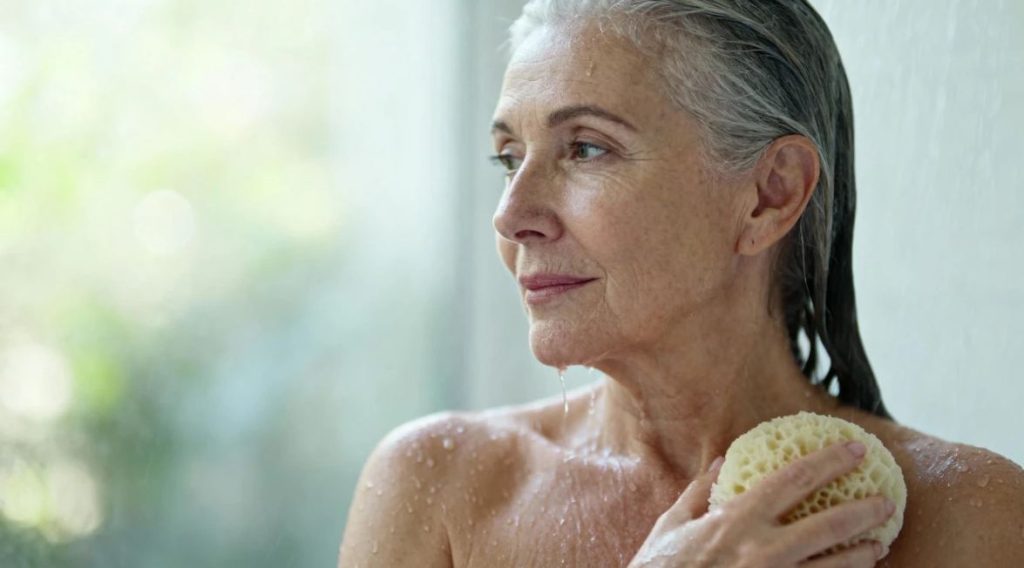
For many people, taking a daily shower has long been considered a basic part of personal hygiene. However, skin health experts suggest that after the age of 65, showering every single day may not always be necessary—and in some cases, it may even do more harm than good. As skin changes with age, so should skincare habits.
How Aging Skin Becomes More Sensitive
As we grow older, our skin naturally becomes thinner, drier, and more fragile. Oil-producing glands slow down, reducing the skin’s ability to retain moisture. This makes older adults more vulnerable to dryness, irritation, and itching. Daily exposure to hot water and harsh soaps can strip away the skin’s natural oils, weakening its protective barrier and increasing discomfort.

The Impact of Frequent Showering
Daily showers, especially those that are long or hot, can worsen dryness and lead to cracked or inflamed skin. Many common soaps and body washes contain fragrances or chemicals that further irritate aging skin. Over time, this can contribute to conditions such as eczema, persistent itching, or increased sensitivity to allergens and bacteria.
Skin’s Natural Defense System
Healthy skin relies on natural oils and beneficial microorganisms to protect against infection and environmental damage. Excessive washing can disrupt this balance. For older adults, maintaining this natural defense is especially important, as healing tends to be slower and the risk of skin infections is higher.
How Often Is Enough?
Experts suggest that for many people over 65, showering two to three times a week is often sufficient, unless there is heavy sweating, physical activity, or specific medical needs. On non-shower days, targeted cleansing—such as washing the face, hands, feet, and intimate areas—can help maintain cleanliness without over-drying the skin.
Choosing Gentler Alternatives
When showers are taken, using lukewarm water instead of hot water can make a significant difference. Mild, fragrance-free cleansers are preferable, as they clean without stripping essential oils. Limiting shower time to five or ten minutes also helps preserve moisture.
The Importance of Moisturizing
Applying a moisturizer immediately after showering, while the skin is still slightly damp, can lock in hydration. Creams and ointments are generally more effective than lotions for aging skin, as they provide a stronger barrier against moisture loss. Regular moisturizing can reduce itching, flaking, and discomfort.
Individual Needs Matter
It’s important to remember that there is no single rule that applies to everyone. Some older adults may still benefit from daily showers, particularly if they are physically active or live in warmer climates. Medical conditions, mobility, and personal comfort should always be considered when adjusting hygiene routines.
A Healthier Approach to Cleanliness
Skipping daily showers after age 65 is not about neglecting hygiene, but about adapting habits to better suit the body’s changing needs. By showering less frequently, choosing gentle products, and prioritizing skin hydration, older adults can support healthier, more comfortable skin while still feeling clean and refreshed.
Conclusion
As the body ages, skincare routines should evolve to reflect changing needs. For many people over 65, showering less frequently can help protect the skin’s natural oils, reduce dryness, and prevent irritation. By choosing gentler cleansing methods, limiting exposure to hot water, and prioritizing regular moisturizing, older adults can maintain healthy, comfortable skin without sacrificing cleanliness. Adapting these habits is a simple yet effective way to support overall well-being and improve daily comfort as the skin becomes more sensitive with age.