
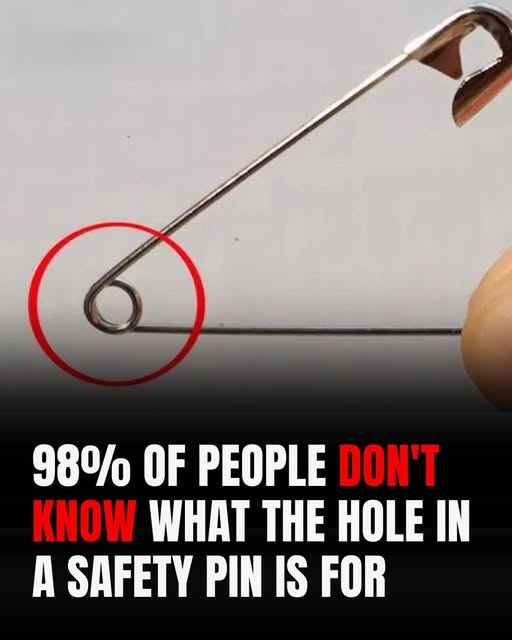
At first glance, a safety pin seems like one of the simplest tools ever created. It is small, inexpensive, and designed to do one job well: fasten fabric safely. However, hidden within its minimal design is a tiny detail that many people notice but rarely question—the small hole at the base of the pin. While it may look insignificant, this little opening actually serves several clever and practical purposes.
A Smart Solution for Better Grip
One of the main reasons for the tiny hole is improved grip and control. When fastening thick fabrics or materials under tension, a safety pin can be difficult to handle. The small hole allows users to insert a piece of thread, wire, or even another pin through it. This provides extra leverage, making it easier to pull the pin through fabric without straining fingers or breaking nails. For people working with heavy textiles, this feature can be surprisingly useful.

Added Strength Under Pressure
The hole also plays an important role in managing pressure. When a safety pin is closed, tension builds along the metal, especially at the curved base. The hole helps distribute that pressure more evenly, reducing stress on the metal. This design choice lowers the risk of the pin bending, snapping, or losing its shape over time. In short, the hole helps the pin stay strong and reliable, even after repeated use.
A Clever Feature for Sewing and Crafting
For sewing enthusiasts and crafters, the tiny hole opens up even more possibilities. Many people use it to guide elastic or ribbon through waistbands, sleeves, or narrow fabric channels. By attaching thread or string through the hole, the safety pin becomes a handy pulling tool that glides smoothly through fabric tunnels. This trick saves time and frustration and is commonly used in both professional tailoring and home sewing projects.
Preventing Accidental Slipping
Another hidden benefit of the hole is safety. When the pin is closed, the hole helps anchor the sharp point more securely within the clasp. This reduces the chance of the pin accidentally opening or slipping free, which could cause scratches or puncture wounds. It is a small design element, but it plays a big role in protecting users from injury.
Designed for Mass Production and Consistency
Beyond everyday use, the hole also has a manufacturing purpose. During production, the hole allows safety pins to be held, aligned, or suspended on wires as they are shaped and assembled. This ensures consistency in size and form while making large-scale production faster and more efficient. What looks like a simple detail is actually a key part of how safety pins are made accurately and affordably.
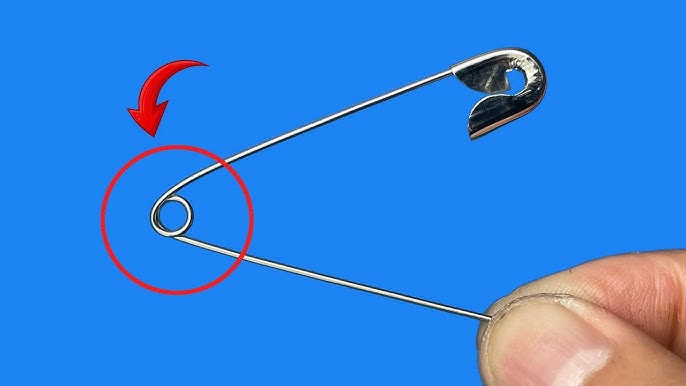
A Small Detail With Big Impact
The safety pin is a perfect example of thoughtful design hiding in plain sight. The tiny hole at its base is not decorative or accidental—it is a multifunctional feature that improves grip, strength, safety, and versatility. Next time you use a safety pin, take a moment to appreciate how such a small detail can make an everyday object far more useful than it appears.