
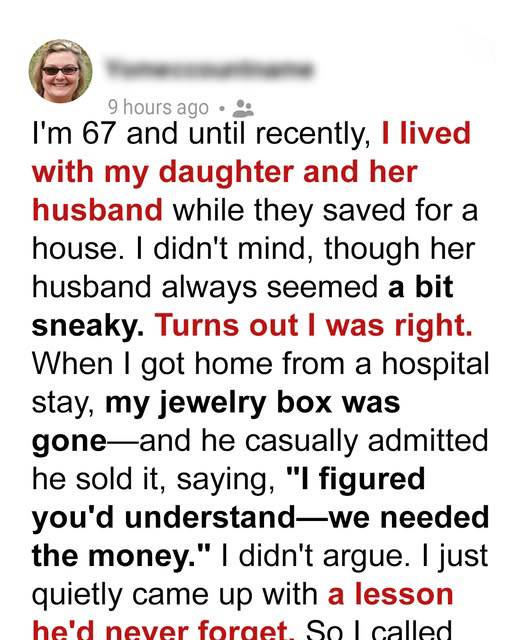
For most of her life, Eleanor Margaret Chen believed she knew what mattered most: family, memories, and the little rituals that gave rhythm to each day. Widowed for several years, Eleanor lived peacefully in her home in New Jersey after losing her husband, Robert. Her days were blissfully simple — wandering her garden, reading mystery novels, and sharing weekly phone calls with her daughter, Lisa. Their bond was close, warm, and filled with laughter. When Lisa and her husband, Nick, asked to move in, Eleanor agreed readily. She longed for companionship and help with house chores that had become harder with age. At first, everything seemed perfect: shared meals, weekend projects, and family visits. But beneath the surface, cracks began to form.
Cracks in the Foundation
Nick was charming but restless. He talked about ambitious plans and investment schemes — none of which ever materialized. Though he helped with small home repairs, his presence often came with subtle unease: borrowing items without asking, scrutinizing valuable possessions, and attempting to justify questionable behaviors as “helping.” Eleanor noticed, but she wanted to believe in her daughter’s choice and gave Nick the benefit of the doubt. That illusion shattered when Eleanor became seriously ill. Taken to the hospital for a severe infection, she spent days under medical care. During that time, her daughter cared for her, and Nick visited only once. When Eleanor returned home, she discovered that her treasured jewelry box — a legacy of decades filled with family heirlooms — was gone. The missing items weren’t just expensive; they were irreplaceable memories: her husband’s anniversary necklace, her mother’s earrings, her grandmother’s brooch — symbols of love, loss, and legacy. Eleanor’s heart sank as she realized someone had taken them while she was too ill to stop it.

The Quiet Theft
Though at first she tried to believe the jewelry was simply misplaced, the truth hit her painfully: it had been stolen. When she asked Nick about it, he offered weak excuses — claiming the pieces were “just sitting there” and could help with financial pressure. His casual dismissal of their emotional value exposed something deeper: a lack of respect and integrity. Eleanor’s daughter Lisa, shocked and devastated, confronted him too. The family tension rose as Nick tried to downplay the wrongdoing, framing it as a misguided attempt to “help the household.” But Eleanor knew the difference between generosity and theft — especially when it came at the cost of memories she could never get back.
Reclaiming What Was Lost
Determined not to be victimized, Eleanor took action. With the help of a friend experienced in legal matters, she filed a police report and began the process of tracking the stolen jewelry. Authorities and pawnshop records eventually led to the recovery of many pieces — a victory that brought back more than just metal and gems. It was a reclaiming of dignity. Nick faced legal consequences, including theft charges and restitution. Though Eleanor didn’t want him imprisoned, she insisted on accountability. Her daughter, shaken by the betrayal, eventually left Nick and sought a new path forward — closer to her mother and with a clearer sense of self.

Strength Through Adversity
In the months that followed, Eleanor rebuilt her life on her own terms. She restored her home, tended her garden, and re‑established peaceful routines. The jewelry she recovered now sits in a place of honor — not as trophies of pain, but symbols of resilience and renewal. Her story is a testament to how betrayal can become a turning point: a moment to reclaim control, set boundaries, and return to the peace that once defined one’s life. It’s proof that sometimes, the greatest treasures aren’t the ones you lose — they’re the ones you never stop fighting for.