
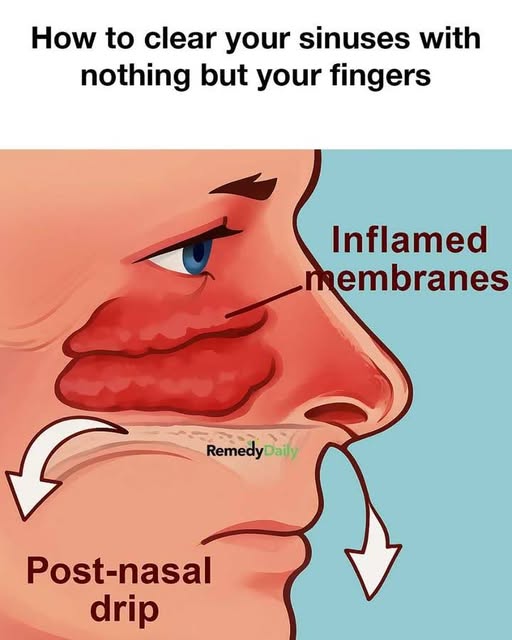
Sinus congestion can be really uncomfortable it often comes with a stuffy nose, pressure around your cheeks or forehead, difficulty breathing through your nose, and sometimes even a headache or a sense of fullness in your face. This happens when the lining of your sinuses becomes swollen or inflamed, commonly triggered by a cold, allergies, or a sinus infection. When that swelling blocks normal mucus drainage, it can lead to that clogged, heavy feeling many of us know too well.
While over‑the‑counter medications can help, there’s another approach that’s natural, gentle, and always available: using your fingers to massage specific points on your face and head. This method — rooted in principles similar to acupressure or reflexology — aims to stimulate circulation, ease tension, and encourage mucus drainage, potentially relieving congestion and pressure without any drugs.
Why Finger Massage Might Work
The idea behind finger-based sinus relief is that certain pressure points on your face correspond to pathways that influence your sinus passages. By applying steady, gentle pressure — and sometimes a little massage — to these areas, you may help reduce inflammation and improve mucus flow. Some research supports acupressure as a tool that may ease sinus symptoms, making this a practical option for anyone wanting a mild, non‑medicated remedy. Because the technique only requires your own hands, you can do it almost anywhere — while lying down, sitting on the couch, or even during a break at work. No pills, no inhalers, no special equipment.
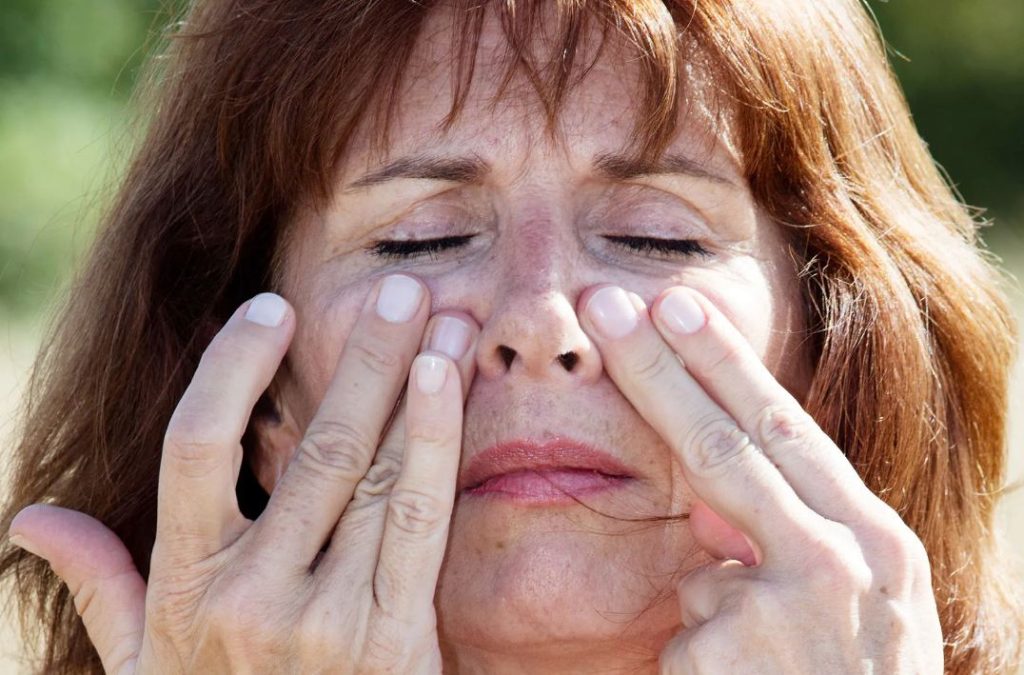
How to Do It: A Step‑by‑Step Guide
Below is a basic guide on performing a finger massage for sinus relief. You can adjust pressure and duration according to your comfort level.
- Find a comfortable, quiet spot. Sit or recline in a relaxed position. Close your eyes if it helps you focus and breathe slowly.
- Locate the pressure points. There are several common areas:
- The sides of your nose, just above the nostrils
- The spots on your cheeks, near the outer corners of your eyes
- The center point between your eyebrows
- The temples, along your hairline
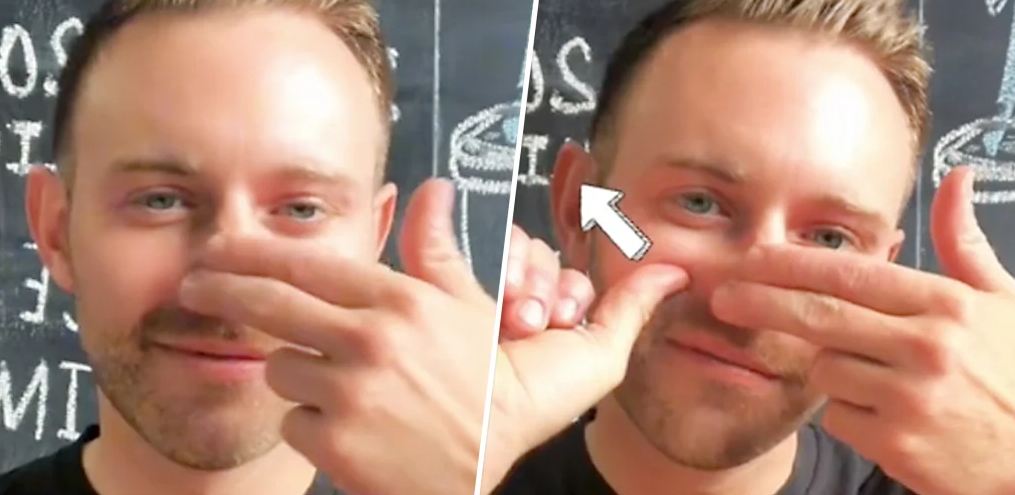
- Apply gentle pressure. Using your fingers — typically your index or middle fingers — press gently but firmly on each point. Hold for about 10–15 seconds, then release.
- Massage in small circles. For added benefit, after pressing, you can massage in small, circular motions for another 10–15 seconds. Breathe slowly and deeply as you do this.
- Repeat as needed. You might go through this cycle 2–3 times, focusing more on areas where you feel the most congestion or pressure.
- Because everyone’s face and sinuses are unique, you may need to experiment a little to find the exact points and amount of pressure that feel most effective.
What It Can (and Can’t) Do
This method has some real advantages: it’s free, drug‑free, and easy to do whenever you need relief — whether at home, at work, or even while traveling. For some people, regular use can ease sinus pressure, reduce congestion, and help restore clearer breathing. Still, it’s important to manage expectations. Finger massage is a supportive technique — not a guaranteed cure. If congestion is due to a serious sinus infection, severe allergies, or another medical issue, it may not provide full relief, and you might still need appropriate medical treatment. That said, pairing gentle acupressure with other mild practices — such as staying hydrated, using steam or a humidifier, and resting — can enhance overall results.
When to Use This Technique
This approach is particularly handy when:
- You’re experiencing mild to moderate sinus pressure or congestion.
- You’d prefer to avoid medication or are looking for a natural way to supplement existing treatments.
- You want a quick, on‑the‑spot remedy — no tools required.
- It can also serve as a preventative measure: regular massage may help maintain clearer sinuses if you’re prone to congestion, especially during allergy seasons or frequent colds.
Final Thoughts
Using your fingers to gently massage specific points on your face and head offers a minimalist, natural way to ease sinus discomfort. It’s simple enough to try right now, yet — for many — surprisingly effective. Though it might not replace medical treatments in every case, it’s a low-cost, low-risk practice worth considering for anyone seeking sinus relief without relying on medications. If you like, I can also rewrite this with 600 or 700 words to add more explanation — just let me know!