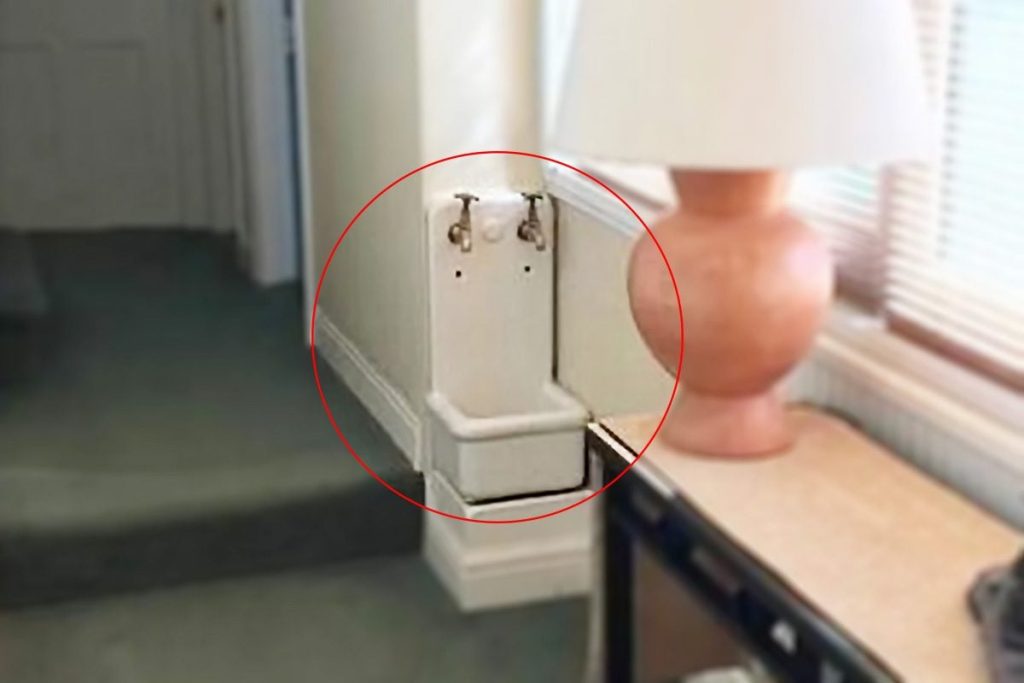
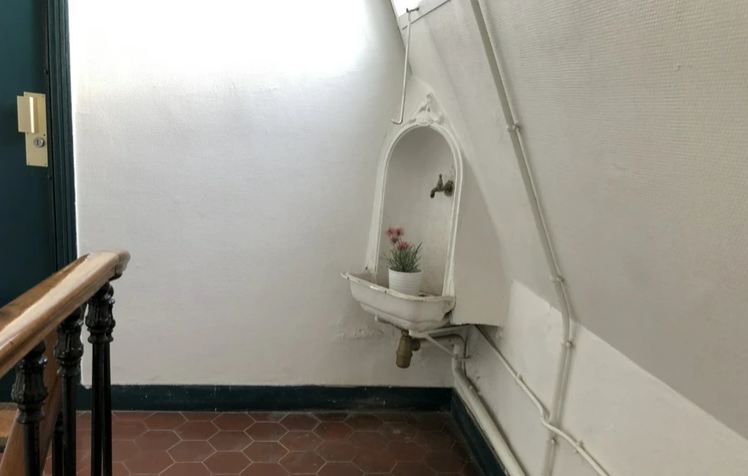
If you walk into an older house and suddenly spot a small sink hanging on the wall of a hallway not a bathroom, kitchen or utility room you might do a double take. It feels odd, maybe out of place: what is a sink doing there? But far from being a quirky design mistake, that tiny basin once had a clear, practical role when homes were built very differently.
Back in the early 1900s (and sometimes earlier), indoor plumbing was rare. Many homes had just a single bathroom — often tucked upstairs or in a remote corner. A full trip to wash up after coming in from the street could be a nuisance, especially for guests. Hallways, meanwhile, were more than just transitional zones: they were where people entered, took off their coats, greeted visitors — a sort of social buffer zone. That’s where the hallway-sink made sense: a compact, no-frills basin for quick hand or face washing — before heading into the dining room, parlor, or kitchen. A little hygiene station that saved everyone the trouble of trekking through the house.
Hygiene, Practicality, and Social Etiquette
The rise of basic hygiene awareness — as people began understanding germs and cleanliness — increased demand for convenient wash spots beyond the main bathroom. A hallway sink offered a way to rinse off dust, soot, or grime brought in from outside before meals, without dispatching guests upstairs or into private quarters. It wasn’t about luxury. Many of these sinks were tiny — barely big enough to wash hands, maybe an apple — but they did the job. Simple taps, a small basin; nothing more elaborate than needed. The point was function over form: a quick rinse, a few splashes, and you’re ready to enter the dining room. In an age where a full bathroom was a luxury, adding more sinks — even miniature ones tucked in hallways — was a clever workaround to bring water and cleanliness into everyday life.
Sinks for Cleaning — Not Just Handwashing
Interestingly, not all hallway sinks served as “guest wash basins.” Some were what you might call “utility sinks” or “cleaning sinks” — used for rinsing mops, rinsing cleaning rags, emptying dirty water, filling buckets, or otherwise helping with household chores. In many older houses, especially those with servants or large living areas, it saved messy journeys through the home. These functional sinks sometimes had higher taps to accommodate buckets, deeper basins for water disposal — much like what some sources call “mop sinks” or “butler’s sinks.” What looks like an odd little fixture today may formerly have served as a busy household workhorse.
A Remnant of a Different Era — And Why They Disappeared
As plumbing technology advanced and modern amenities spread, houses began to standardize bathrooms, powder rooms, and multiple sinks — making the hallway sink less necessary. New floor plans rarely allocate space for sinks in corridors anymore, favoring instead kitchen, bathrooms or utility rooms. Additionally, modern design often views hallways as transitional — minimal, spare, and uncluttered. A protruding sink could obstruct flow or look awkward. As a result, many of these old hallway sinks were removed, tiled over, or forgotten. In homes where they remain, many people just pass them by without realizing the history behind them. Yet, for those interested in architectural history or vintage homes, a hallway sink is a fascinating remnant — a reminder of how design adapted to practicality long before modern plumbing became ubiquitous.
Why Hallway Sinks Still Matter Today
Beyond nostalgia, these tiny fixtures show a creative solution to household challenges: how to provide hygiene and utility without full infrastructure. In compact or retrofit homes, the idea resonates strongly — even today: a small wash basin near the entrance, a mop-bucket station hidden in a hallway closet, or a quick-wash spot before dinner can be practical. They also remind us that house design evolves with technology and lifestyle. What seems odd now made perfect sense then. Even if you don’t keep one for daily use, a hallway sink can tell a story — about past priorities, domestic life, and the cleverness of earlier homeowners. Next time you see one — don’t dismiss it as odd. Think of it as a small piece of history still quietly hanging on.