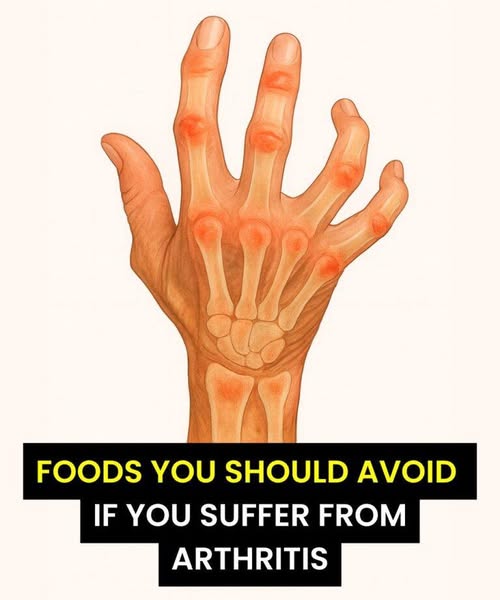
Arthritis whether osteoarthritis (OA) or rheumatoid arthritis (RA) involves inflammation of the joints, which can cause pain, stiffness, swelling, and reduced mobility. Certain foods can increase inflammation, potentially making symptoms worse, while others help calm it. Avoiding the most inflammatory foods is a key part of managing arthritis through diet.
Inflammation isn’t always visible, but foods high in added sugars, unhealthy fats, and refined carbohydrates can trigger it by increasing inflammatory markers like C-reactive protein (CRP). Cutting back on problematic foods can ease arthritis flare-ups and improve comfort over time.
1. Added Sugars and Sweetened Beverages
Sugary drinks (like soda and sweetened juices) and foods with added sugar — including candy, pastries, ice cream, and baked goods — are among the biggest contributors to inflammation. High sugar intake stimulates the release of inflammatory messengers in the body, which may worsen joint pain and swelling. Even sauces, dressings, and packaged foods can hide added sugars, so reading labels helps you avoid inflammation bloating your joints.

2. Processed and Red Meats
Red meat and processed meats like bacon, sausage, hot dogs, and deli meats are high in saturated fats and compounds known as advanced glycation end products (AGEs). These can increase inflammatory responses in the body, which is linked to higher arthritis symptoms. Choosing lean proteins like chicken, fish, beans, or legumes instead can support joint health and reduce inflammation.
3. Highly Processed Foods
Fast food, packaged snacks, ready meals, and many frozen dinners are often high in refined carbs, unhealthy fats, and additives that trigger inflammation. Foods like chips, cookies, crackers, and processed breakfast items are major offenders. Because they’re low in nutrients and high in inflammatory ingredients, these foods can also contribute to weight gain — and extra body weight adds stress to joints, especially the knees and hips.
4. Fried Foods and Unhealthy Fats
Fried foods and items cooked in oils high in omega-6 fatty acids or trans fats — such as French fries, deep-fried snacks, margarine, and certain baked goods — are linked to increased inflammation. These fats can disrupt the balance between omega-6 and omega-3 fatty acids, promoting inflammatory processes. Choosing healthier fats like olive oil and omega-3-rich fish helps support joints instead of aggravating them.
5. Refined Carbohydrates
Refined grains in white bread, white rice, pastries, and many types of pasta are quickly digested, causing rapid blood sugar spikes and inflammation. These carbs lack fiber and many nutrients that help counter inflammatory responses. Opting for whole grains such as brown rice, quinoa, oats, and whole wheat products may reduce inflammation and support overall metabolic health.
6. Certain Vegetable Oils and Omega-6 Fats
While some fats are healthy, an excessive intake of omega-6 fatty acids — common in corn oil, sunflower oil, safflower oil, and margarine — can contribute to inflammation if not balanced with anti-inflammatory omega-3 fats. Switching to olive oil, avocado oil, or cooking with healthy fats helps promote a more anti-inflammatory diet.
7. Sodium and High-Salt Foods
Highly salted foods — including canned soups, snack foods, cured meats, and condiments — can contribute to inflammation and fluid retention, which may exacerbate joint swelling and discomfort. Reducing salt intake can ease inflammation and support overall joint health.
8. Alcohol
Alcohol consumption — particularly in excess — may increase inflammation and interfere with the body’s ability to absorb nutrients important for joint health. It can also interact with certain arthritis medications. Limiting alcohol or speaking with a doctor about safe levels is a good idea if arthritis symptoms are a concern.

Personalized Sensitivities
Some people with arthritis may also notice individual triggers, such as dairy or gluten, make their symptoms worse. While not everyone reacts the same way, paying attention to what causes flare-ups and tweaking your diet accordingly can help you feel better.
Takeaway
Avoiding foods that fuel inflammation — like added sugars, processed and red meats, refined carbs, fried and processed foods, certain vegetable oils, high-salt foods, and excessive alcohol — can help reduce arthritis discomfort and improve joint health. Pairing these changes with nutrient-dense, anti-inflammatory foods (like fruits, vegetables, fatty fish, and whole grains) and consulting a healthcare provider or dietitian offers the most effective dietary strategy for managing arthritis symptoms.